Is It Possible to Test the Indoor Air Quality in Your Home in the North Shore?
Yes, homeowners can test indoor air quality using DIY kits, digital monitors, and professional air quality assessments. Testing helps identify pollutants like VOCs, mold spores, radon, and carbon monoxide. For homeowners in North Vancouver and the North Shore, where older housing stock and wet coastal conditions can intensify air quality issues, testing is a practical first step before or after a major renovation.
Most people assume air quality is something you only worry about outdoors. Inside your own home, though, the air can carry pollutants that are harder to see and sometimes harder to attribute to a specific cause. Musty smells, persistent headaches, or unexplained respiratory irritation are often early signs. The good news is that testing your indoor air quality is absolutely possible, and in many cases, it leads directly to a fixable problem.
Key Takeaways
- Indoor air quality testing is accessible to homeowners through DIY kits, plug-in monitors, and professional assessments.
- Common indoor pollutants include radon, VOCs, carbon monoxide, mold spores, particulate matter, and excess humidity.
- Older North Shore homes are particularly susceptible to moisture-driven air quality problems due to the region’s climate.
- Major renovations can significantly improve indoor air quality when planned with the right materials and ventilation strategy.
- Persistent physical symptoms like fatigue, palpitations, phlegm, or headaches can indicate a serious air quality issue worth investigating.
- Professional testing gives more precise results than consumer monitors, especially for pollutants like radon and mold.
Things You Must Know
1. Consumer Monitors Catch Some Pollutants, Not All
Plug-in air quality monitors are useful for tracking particulates, CO2, humidity, and some VOC levels in real time. They do not reliably detect radon, asbestos fibres, or specific mold species. If you suspect any of these, a professional test or specialized kit is the right approach, not a general-purpose monitor from an electronics retailer.
2. Moisture Is the Root Cause of Many North Shore Air Quality Problems
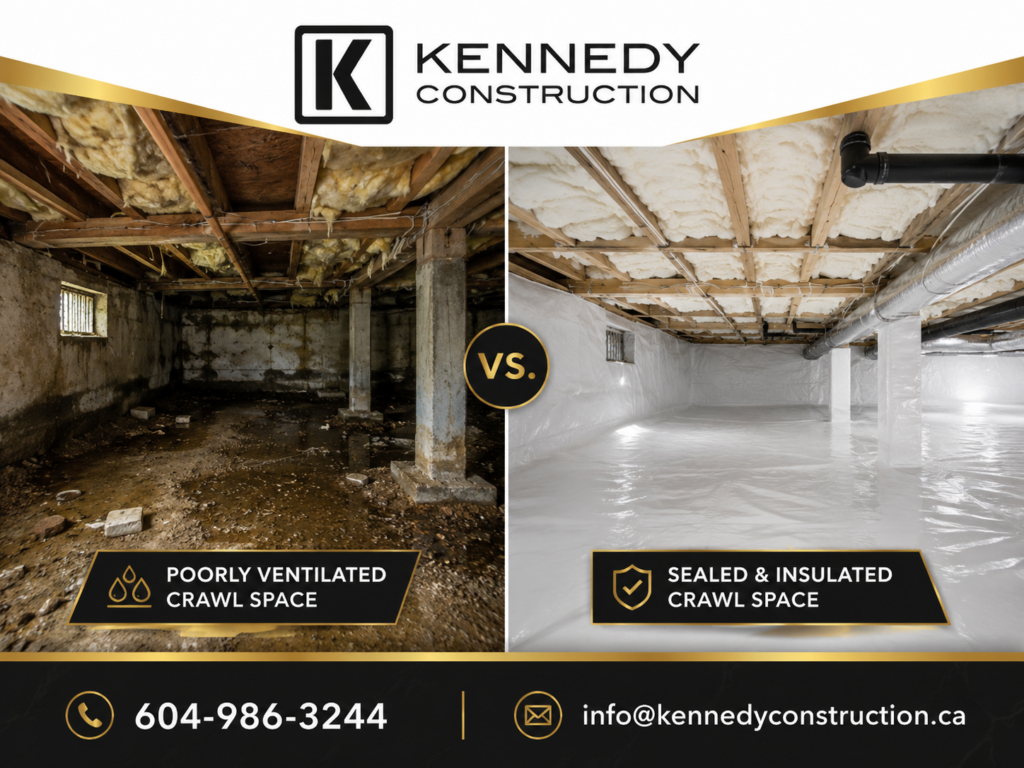
The Lower Mainland’s wet climate means homes on the North Shore deal with elevated humidity year-round. When moisture gets into wall assemblies, crawl spaces, or attic spaces, mold can establish long before it becomes visible. Testing for airborne mold spores can reveal a problem that a visual inspection alone would miss. This is especially relevant in homes built before modern building envelope standards were adopted.
3. Renovation Work Can Temporarily Worsen and Permanently Improve Air Quality
Disturbing older finishes, adhesives, or insulation during a renovation can release particles and compounds that weren’t previously circulating. A well-planned renovation that includes envelope upgrades, proper ventilation, and low-VOC materials can leave the home in significantly better shape than it started. The key is working with a contractor who understands how building decisions affect air quality long after the project is finished.
What Pollutants Should You Actually Be Testing For?
Not all air quality tests measure the same things. Before choosing a testing method, it helps to know which pollutants are most relevant to your home’s age, construction, and symptoms.
| Pollutant | Common Source | Testing Method | Risk Level |
| Radon | Soil beneath foundation | Charcoal canister or continuous monitor | High (carcinogen) |
| Mold Spores | Moisture intrusion, poor ventilation | Air sampling, lab analysis | High (respiratory) |
| VOCs | Paints, adhesives, flooring, furniture | Consumer monitors, lab kits | Moderate to High |
| Carbon Monoxide | Gas appliances, attached garages | CO detector (plug-in or hardwired) | Very High (toxic) |
| Particulate Matter (PM2.5) | Cooking, dust, wildfire smoke | Consumer air quality monitor | Moderate |
| Excess Humidity | Poor ventilation, crawl spaces | Hygrometer or smart monitor | Moderate (mold trigger) |
How Can You Test Your Indoor Air Quality at Home?
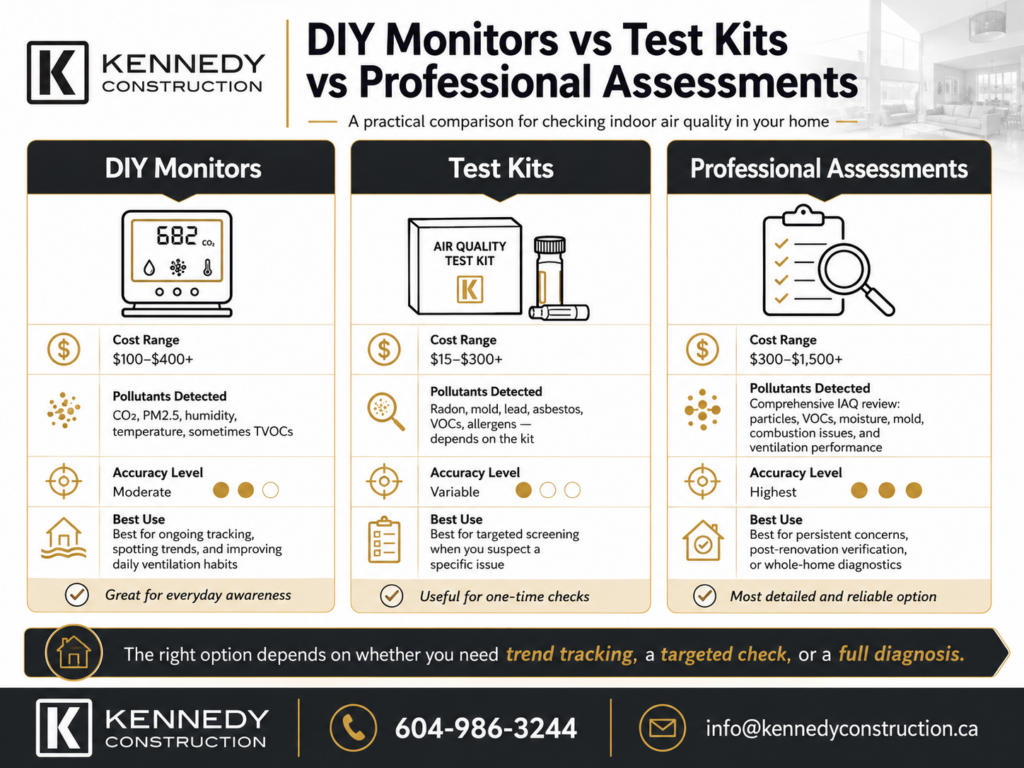
There are three practical approaches, each suited to different situations and budgets.
Option 1: Consumer Air Quality Monitors
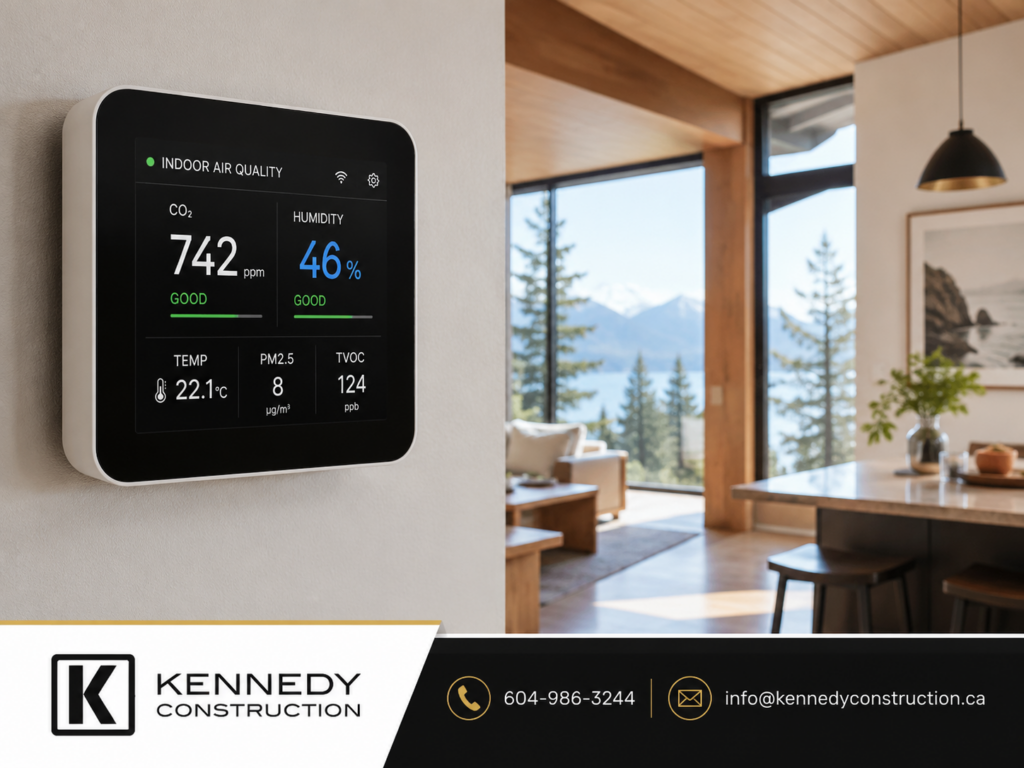
Plug-in or tabletop monitors give you continuous, real-time readings of particulate matter, CO2, humidity, temperature, and sometimes VOC levels. They are a reasonable starting point for homeowners who want ongoing visibility into their home’s air conditions. These devices work well for identifying spikes (for example, after cooking or during wildfire season) but they cannot identify the specific compounds behind a VOC reading, and they do not test for radon or biological contaminants.
Option 2: DIY Test Kits
Home test kits are available for mold, radon, and some VOCs. Most involve a passive collection device (a canister, strip, or swab) that you leave in place for a set period, then mail to a certified lab for analysis. Radon test kits are particularly well-suited to this format because radon requires a minimum exposure period to produce a reliable result. These kits are more specific than monitors but only capture a snapshot, not ongoing conditions.
Option 3: Professional Air Quality Assessment
A certified indoor air quality professional uses calibrated equipment to test for a broader range of pollutants, collect air samples for lab analysis, and interpret results in the context of your home’s construction and conditions. This is the most thorough approach and the one most appropriate for homes with suspected mold problems, homes built before the 1990s, or any situation where occupants are experiencing health symptoms that might be air-quality related.
How Do You Know If the Air in Your House Might Be a Problem?
Air quality issues rarely announce themselves clearly. More often, they show up as patterns that are easy to dismiss individually but meaningful when you consider them together.
Studies on indoor air quality suggest that people spend upwards of 90% of their time indoors, making residential air quality a significant contributor to overall health outcomes, particularly for those with existing respiratory or cardiovascular conditions.
Some of the most common physical signs that indoor air quality may be affecting you include:
- Waking up with congestion or a sore throat that clears after leaving the house
- Persistent fatigue that doesn’t resolve with rest
- Eye, nose, or throat irritation that worsens indoors
- Frequent headaches concentrated at certain times of day or in specific rooms
- Unusual phlegm production without a cold or allergy diagnosis
- Heart palpitations, especially in poorly ventilated spaces
The pattern of symptoms matters as much as the symptoms themselves. If problems improve when you leave the home and return when you come back, that is a meaningful signal worth investigating.
What Does a Step-by-Step Home Air Quality Assessment Look Like?
- Start with carbon monoxide: If you don’t have hardwired CO detectors near sleeping areas and on every level, install them first. This is a life-safety baseline, not an optional step.
- Check humidity levels: Use a hygrometer to measure relative humidity in different areas of the home. Sustained humidity above 60% creates conditions where mold can grow. Basements, crawl spaces, and bathrooms are priority zones.
- Look for visible signs of moisture damage: Staining on ceilings or walls, peeling paint, or a persistent musty smell in any room are indicators worth following up with testing.
- Test for radon: Place a radon test kit in the lowest occupied level of the home. Follow kit instructions for the minimum test duration, typically 48 hours for short-term kits or up to 90 days for long-term accuracy.
- Consider a VOC assessment: If you have recently renovated, moved into a newly finished space, or installed new flooring or cabinetry, testing for VOC off-gassing is worth doing. Lab kits or a professional assessment are more reliable than general consumer monitors for this purpose.
- Engage a professional if symptoms persist or results are unclear: A certified assessor can conduct air sampling, interpret results, and connect air quality findings to specific construction or ventilation deficiencies in the home.
How Does Renovation Work Affect Indoor Air Quality?
This is where the connection between construction quality and air quality becomes very direct. For homeowners planning or evaluating a major renovation on the North Shore, the choices made during that project have long-lasting effects on the air inside the home.
Building envelope improvements, including airtightness upgrades and proper vapour control, are consistently cited in building science research as among the most impactful interventions for improving both energy performance and indoor air quality in existing residential construction.
Older North Shore homes, particularly those built in the 1970s through 1990s, often have building envelopes that allow moisture to enter wall assemblies. This creates chronic humidity problems that no amount of air purification fully addresses. The right renovation approach targets the source: improving the envelope, upgrading insulation, and ensuring that mechanical ventilation (such as an HRV system) is properly sized and integrated.
Choosing healthy building materials for your North Shore home renovation is equally important. Low-VOC paints, formaldehyde-free cabinetry, and natural or inert flooring materials all contribute to better long-term air quality in a finished space. This is not a marketing upgrade; it is a construction decision that affects what your household breathes for years after the project is complete.
For homeowners thinking through the broader picture of how a home renovation can improve indoor air quality and wellness on the North Shore, the structural and mechanical choices are as important as any surface finish.
DIY Testing vs. Professional Assessment: Which One Is Right for You?
| Situation | Recommended Approach |
| General curiosity, no symptoms | Consumer monitor for ongoing tracking |
| Testing radon specifically | Certified radon test kit (lab-analyzed) |
| Musty smell, visible staining, suspected mold | Professional air sampling and assessment |
| Persistent health symptoms in occupants | Professional assessment, consult physician |
| Pre-renovation or post-renovation verification | Professional testing for baseline and results |
| New flooring, cabinets, or finishes installed | Lab VOC kit or professional VOC assessment |
Common Mistakes Homeowners Make When Testing Air Quality
- Relying on smell alone: Many serious pollutants, including radon and carbon monoxide, are completely odourless. A home that smells fine can still have dangerous air quality issues.
- Testing only one area of the home: Air quality can vary significantly between floors, especially when moisture is involved. The basement and crawl space often tell a different story than the main living areas.
- Ignoring the building envelope while addressing symptoms: Running air purifiers and buying monitors will not fix a moisture problem originating in the wall assembly. Treating symptoms without addressing the source rarely produces lasting results.
- Assuming a new build is automatically safe: New construction can still off-gas VOCs from finishes, adhesives, and insulation. Material choices during construction matter as much as post-occupancy measures.
- Not retesting after renovations: If a major renovation was intended to improve air quality, verification testing after completion confirms whether the work achieved its goals.
Health Canada recommends that radon levels in residential dwellings be kept below 200 Bq/m³, and that any home exceeding this threshold take remediation action. Testing is the only way to know whether a home meets this guideline, since radon is invisible and odorless.
According to Health Canada and the BC Centre for Disease Control, radon is the second leading cause of lung cancer in Canada after smoking. British Columbia’s geology means radon exposure varies considerably by location, making localized testing more reliable than regional averages.
Frequently Asked Questions
How can I test my indoor air quality at home?
The most accessible starting point is a consumer air quality monitor, which tracks particulates, CO2, humidity, and sometimes VOCs in real time. For specific pollutants like radon or mold, certified test kits are available at hardware and home improvement stores. These kits typically involve passive collection over a set period followed by lab analysis. If you have health symptoms, a persistent smell, or visible moisture damage, a professional assessment gives you more complete and reliable results than a consumer device alone.
How do you know if the air in your house is toxic?
There is no single definitive sign, which is part of what makes indoor air quality difficult to self-diagnose. Common indicators include health symptoms that improve when you leave the home and return when you come back, musty or chemical odours, visible mold or moisture staining, and unexplained fatigue or respiratory irritation. Since several serious pollutants (radon, CO) are completely undetectable without equipment, testing is the only way to know with certainty. Do not wait for obvious symptoms if you have reason to suspect a problem.
Can poor air quality cause palpitations?
Yes, in some cases. Carbon monoxide exposure is a well-documented cause of heart palpitations and should be treated as a medical emergency if suspected. Elevated particulate matter and VOC exposure can also trigger cardiovascular responses in sensitive individuals, particularly those with existing heart or lung conditions. If you experience palpitations and suspect an air quality issue, address the potential CO risk first (ensure your detectors are working and leave the home if they alarm), then consult a physician alongside pursuing air quality testing.
Can bad air quality cause phlegm?
Yes. Exposure to airborne mold spores, VOCs, dust particles, and other irritants commonly triggers increased mucus production as the respiratory system tries to protect itself. Phlegm that is particularly persistent, that worsens at home and improves elsewhere, or that accompanies other respiratory symptoms is worth taking seriously. If the pattern correlates with being in a specific room or area of the home, that location is a good place to prioritize for testing, especially for mold and moisture.
What are the symptoms of poor air quality in a house?
Symptoms vary depending on the pollutant and the individual, but common patterns include morning congestion or sore throat that clears during the day, persistent headaches, eye or throat irritation, fatigue that does not respond to rest, increased frequency of respiratory infections, and unexplained skin irritation. Children, elderly occupants, and anyone with asthma or allergies are often more sensitive and may show symptoms before other household members. The location and timing of symptoms (which rooms, which times of day) can help narrow down the source before testing begins.
Understanding the Connection to Your North Shore Home
North Shore homes, particularly those built several decades ago in North Vancouver and West Vancouver, were not designed with modern building science in mind. Wall assemblies, crawl spaces, and attic construction from that era often allowed moisture movement that current standards prevent. Over time, that moisture creates conditions where air quality problems develop quietly, often for years before they’re identified.
Understanding why moisture control matters in North Shore home renovations is a starting point for homeowners who want to address root causes rather than symptoms. And if you’re at the stage of evaluating which contractor to trust with that work, knowing how to choose a builder for a healthy, high-quality renovation on the North Shore can help you ask the right questions before signing anything.
Conclusion
Testing your indoor air quality is not only possible, it is practical, accessible, and often the first step toward solving a problem that has been affecting your household without a clear explanation. Consumer monitors give you ongoing visibility. Test kits provide specific answers on targeted pollutants. Professional assessments go deeper when the situation calls for it.
For homeowners in North Vancouver, West Vancouver, and across the North Shore, the region’s climate and older housing stock make air quality testing especially worthwhile, particularly before or after a major renovation. The most durable solution to poor indoor air quality is almost always found in the building itself: the envelope, the ventilation, and the materials used during construction.
Kennedy Construction has spent over 20 years working on large-scale residential renovations across the North Shore. If you’re considering a renovation and want to understand how the project can be planned to improve your home’s air quality long-term, our team is happy to walk you through the options. Call us at 604-986-3244 to start the conversation.