Design-Build in North Vancouver
Design-build in North Vancouver combines architectural design and construction under a single contract, replacing the traditional two-phase process where design and building teams work separately. For homeowners on the North Shore, this approach reduces budget overruns, shortens timelines, and keeps communication clear from the first concept sketch to the final inspection. It suits the region’s mix of hillside properties, older post-war homes, and newer laneway and infill projects equally well.
Most renovation and construction projects in North Vancouver run into trouble not because of bad ideas, but because the people designing them and the people building them aren’t fully aligned. When your architect hands off drawings to a general contractor who wasn’t part of the planning, surprises follow. Costs shift. Timelines stretch. The design-build model exists specifically to close that gap, and on the North Shore, where site conditions and municipal requirements add their own layers of complexity, that kind of coordination matters even more.
Key Takeaways
- Design-build combines design and construction under one contract, giving homeowners a single point of accountability throughout the project.
- North Vancouver’s hillside terrain, moisture-heavy climate, and District and City permit requirements make pre-construction planning especially important.
- The integrated process typically reduces costly mid-project changes because contractors are involved in design decisions from the beginning.
- Design-build is well-suited to custom homes, major renovations, laneway homes, and multi-unit infill projects across the North Shore.
- Choosing a local team with North Vancouver-specific experience matters when navigating zoning, setback rules, and neighbourhood context.
- Understanding what to ask before signing a contract can protect your budget and set realistic expectations from day one.
What Does Design-Build Actually Mean?
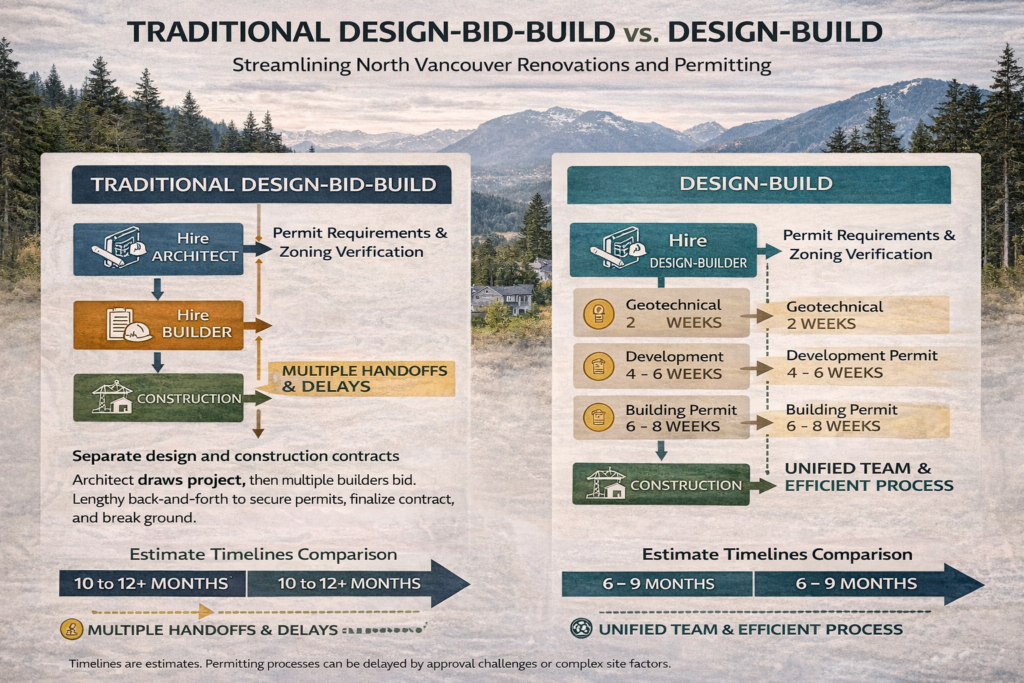
The term gets used loosely, so it’s worth being precise. In a traditional delivery model, a homeowner hires an architect, receives completed drawings, then sends those drawings out for contractor bids. The design team and construction team are separate businesses with separate interests, and the homeowner manages the relationship between them.
Design-build collapses that structure. One firm, or one closely integrated team, is responsible for both phases. The designer, estimator, and builder are working from the same information at the same time. When a structural detail changes, the cost implication is known immediately, not after the drawings have been sent to tender.
Studies on construction project delivery consistently show that design-build projects experience fewer cost overruns than traditional design-bid-build contracts. Industry research in Canada suggests that integrated project delivery can reduce total project costs by 6 to 10 percent compared to conventional methods, largely because design decisions are evaluated for constructability before drawings are finalized.
Why North Vancouver Specifically Benefits from This Approach
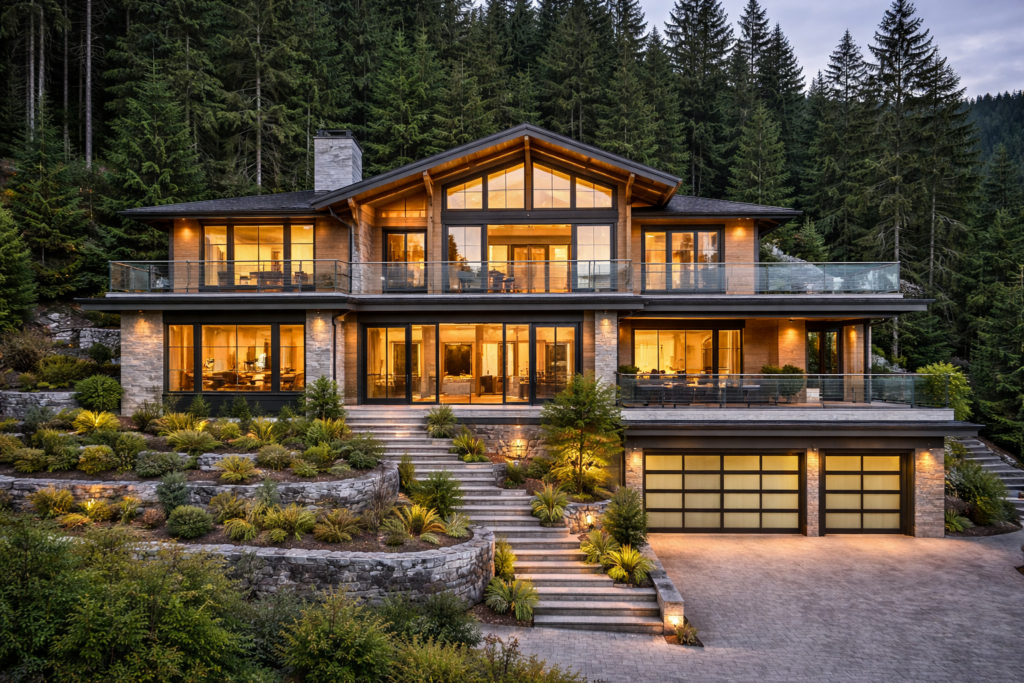
The North Shore presents a specific set of challenges that amplify every benefit of integrated design and construction. Hillside lots in areas like Lynn Valley, Edgemont Village, and Mosquito Creek often require engineered foundations, site-specific drainage planning, and retaining structures that are far easier to budget accurately when your builder is in the room during design.
The climate adds another layer. North Vancouver receives significantly more rainfall than most Metro Vancouver municipalities, and moisture management in wall assemblies, rooflines, and landscaping needs to be designed with that in mind from the start. A designer working in isolation may specify a detail that looks right on paper but creates maintenance headaches in the Pacific Northwest’s wet winters.
North Vancouver’s District and City municipalities each maintain distinct zoning bylaws, Development Permit Area guidelines, and tree protection regulations. Properties in sensitive hillside zones may require geotechnical assessments before permits are issued, a step that design-build teams can incorporate into early project timelines rather than discovering mid-process.
For homeowners interested in home renovations in North Vancouver, understanding the permit environment before finalizing a design can be the difference between a six-month project and a twelve-month one.
Design-Build vs. Traditional Construction: A Direct Comparison
| Factor | Traditional (Design-Bid-Build) | Design-Build |
| Accountability | Split between designer and contractor | Single team, single contract |
| Budget certainty | Cost unknown until tender stage | Cost input begins during design |
| Change order risk | Higher — design gaps found in the field | Lower — conflicts resolved in planning |
| Timeline | Longer — sequential phases | Shorter — phases can overlap |
| Client communication | Multiple contacts, potential gaps | One primary contact throughout |
| Best suited for | Projects where design is fully defined upfront | Custom homes, major renovations, complex sites |
How the Design-Build Process Works, Step by Step
Knowing the sequence helps homeowners prepare the right questions and set realistic expectations. Here’s how a well-run design-build project typically unfolds on the North Shore.
- Discovery and site assessment. The team visits the property to evaluate lot conditions, access constraints, and any factors — slope, tree coverage, neighbouring structures — that will shape the design. For hillside properties in North Vancouver, this step often includes preliminary geotechnical review.
- Concept design and budget alignment. Early schematic drawings are developed alongside a preliminary cost estimate. The goal is to make sure the design direction and the budget are compatible before significant design fees are spent. This is where design-build’s advantage over traditional delivery is most visible.
- Design development and permit preparation. Once the concept is approved, drawings are refined to a permit-ready standard. For a sustainable home in North Vancouver, this stage may also involve energy modelling and envelope performance planning to meet BC Energy Step Code requirements.
- Permit submission and approval. The design-build team manages the permit application, including any referrals to the District or City’s Development Services, engineering sign-offs, and arborist reports if trees are affected.
- Construction documentation and trade coordination. Detailed construction drawings are issued, and subcontractors are brought in. Because the builder has been part of the design process, trade scopes are typically cleaner and fewer gaps exist in the documentation.
- Construction and site management. Active building begins, with regular client updates and site meetings. Changes can still happen, but the integrated team structure means they’re processed faster and with full cost transparency.
- Final inspections and occupancy. The team manages all required inspections, coordinates the occupancy permit application, and delivers the completed project with full documentation.
Typical Project Costs in North Vancouver
In the North Vancouver market, design-build costs for a major whole-home renovation typically range from $350 to $600 per square foot, depending on finish level, structural scope, and site complexity. Custom new builds on the North Shore often fall between $550 and $900 per square foot when hillside engineering, high-performance envelopes, and premium finishes are included. These figures reflect 2024-2025 local labour and material pricing and should be confirmed with a current estimate from a qualified contractor.
| Project Type | Estimated Cost Range (CAD) | Key Cost Drivers |
| Major renovation (1,500–2,500 sq ft) | $525,000–$1,500,000 | Structural changes, kitchen/bath scope, finishes |
| Custom new build (2,000–3,000 sq ft) | $1,100,000–$2,700,000 | Site prep, geotechnical, envelope spec, finishes |
| Laneway home (600–900 sq ft) | $300,000–$550,000 | Access, utility connections, zoning compliance |
| Full gut renovation of post-war home | $450,000–$900,000+ | Hazmat abatement, structural upgrades, services |
What Makes a Strong Design-Build Project in North Vancouver?
The best outcomes share a few consistent qualities. The design respects its site, works with topography rather than fighting it, and responds to the West Coast climate through material choices and building science. Teams that understand how to build a custom home in North Vancouver bring that contextual knowledge into every design decision, from roof overhangs that manage rainfall to window placements that capture mountain views without sacrificing thermal performance.
Older North Shore homes, particularly those built in the 1950s through 1970s, often contain asbestos-containing materials, outdated electrical panels, and undersized foundations. A design-build team experienced in transforming old homes in North Vancouver will include hazardous material surveys and structural assessments in the early project scope, rather than discovering them after demolition has started.
Common Mistakes to Avoid in Design-Build Projects
- Choosing based on price alone. The lowest design-build quote often reflects a thinner scope of services, not a more efficient team. Understand what’s included before comparing numbers.
- Skipping the geotechnical assessment. On North Vancouver’s hillside lots, soil conditions can dramatically affect foundation costs. Discovering this after permits are submitted is expensive and time-consuming.
- Underestimating permit timelines. North Vancouver permit approval timelines vary by project type and current municipal workload. Build realistic buffer into your schedule, especially for complex or Development Permit-required projects.
- Assuming the design fee covers everything. Some design-build firms charge a separate design retainer before construction is contracted. Clarify the fee structure and what triggers a refund or credit if you don’t proceed to construction.
- Not defining the finish level upfront. “Standard” means different things to different builders. A detailed finish schedule agreed upon before construction begins prevents disagreements and budget surprises later.
- Overlooking BC Energy Step Code requirements. Most new construction and significant renovations in BC must comply with energy efficiency standards that affect insulation values, air sealing, and mechanical systems. A design-build team should be guiding you through compliance, not leaving it to a last-minute building inspector conversation.
Which Areas Around North Vancouver Does Design-Build Serve?
Design-build teams based in North Vancouver typically serve projects across the North Shore and broader Lower Mainland, including:
- Lynn Valley and Lynn Creek
- Edgemont Village and Grouse Woods
- Deep Cove and Seymour
- Lonsdale and Central Lonsdale
- West Vancouver (including Dundarave, Ambleside, and British Properties)
- Capilano and Canyon Heights
- Burnaby Mountain and Hastings Sunrise (for teams covering the broader Metro region)
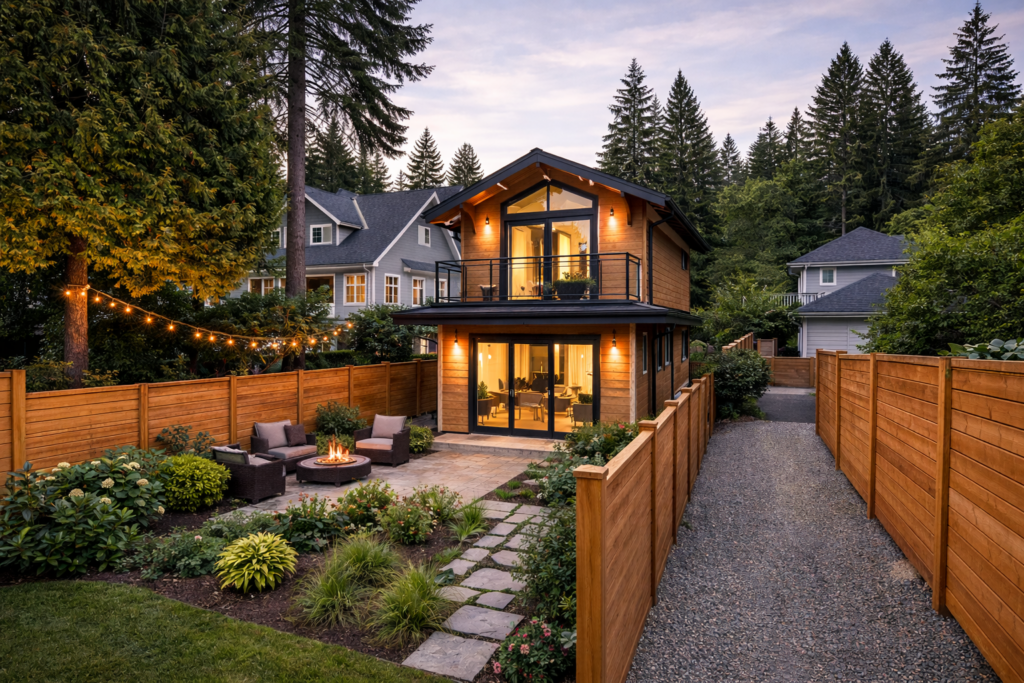
Laneway homes and secondary suite additions have become increasingly common across North Vancouver following updated bylaws in both the City and District that expanded allowable secondary dwelling units. Homeowners in eligible zones can add income-generating units that may qualify for specific financing programs under federal and provincial housing initiatives introduced between 2023 and 2025.
Frequently Asked Questions
What Are the Advantages of a Design-Build Approach in North Vancouver?
The primary advantages are accountability, budget clarity, and speed. Because a single team manages both design and construction, there’s no finger-pointing when something unexpected comes up on a hillside site or in an older home with hidden structural issues. Homeowners deal with one point of contact rather than managing a relationship between two separate firms. For complex North Shore properties, this integrated approach can also surface site-specific challenges earlier, when solutions are still relatively inexpensive to incorporate.
What Permits Are Required for a Design-Build Project?
Most significant construction projects in North Vancouver require a Building Permit at minimum, issued through either the City of North Vancouver or the District of North Vancouver depending on the property’s location. Larger renovations, new builds, or projects in Development Permit Areas may also require a Development Permit, a geotechnical engineer’s letter of assurance, arborist reports for tree removal, and approval from Metro Vancouver for connection changes. A design-build team experienced in the North Shore should manage the permit application on your behalf and track all required referrals.
What Is the Typical Timeline for a Project?
A major renovation in North Vancouver, from first design meeting to final occupancy, typically takes 12 to 18 months. Custom new builds on complex hillside sites can run 18 to 24 months or longer depending on permit timelines, site conditions, and scope. Laneway homes often fall in the 10 to 14 month range when the approval process moves smoothly. These timelines are approximate and vary based on current municipal permit queues and the completeness of design documentation at submission.
What Are the Key Considerations for Laneway Homes or Multi-Unit Projects?
Laneway homes require confirmation that the property meets size, setback, and access requirements under current North Vancouver zoning bylaws before design work begins. Key issues include utility connections (whether a separate service is required or if the laneway home ties into the main home’s services), parking compliance, and any Development Permit requirements that apply to your specific zone. For multi-unit infill projects, engaging a design-build team early ensures that the project’s density and massing align with neighbourhood context guidelines that the municipality considers during the review process.
What Should I Ask a Design-Build Contractor Before Hiring?
Start by asking for examples of similar completed projects in North Vancouver, specifically on lots or home types comparable to yours. Ask how design and construction fees are structured and what triggers additional charges. Request a clear explanation of who manages the permit process and what happens if your application requires revisions. Ask whether the team uses fixed-price contracts or cost-plus agreements, and what the escalation process looks like if material costs change mid-project. Finally, ask for references from past clients and follow up on them directly.
Ready to Build Something Worth Living In?
Design-build works because it treats design decisions and construction realities as two sides of the same conversation, not two separate projects. On the North Shore, where every hillside lot has its own character and older homes carry their own history, that kind of integrated thinking isn’t just convenient. It’s the approach that produces homes built to last.
Kennedy Construction has been working with North Vancouver homeowners through exactly this kind of process, handling complex renovations, custom builds, and everything in between with a team that knows the terrain, the permit environment, and what it takes to build well in this climate. If you’re ready to talk through your project, call Kennedy Construction at (604) 259-7370 for a straightforward conversation about what’s possible on your property.